Saturday, November 19, 2016

We are making our way through the Aleph-Bet


This week's letter:
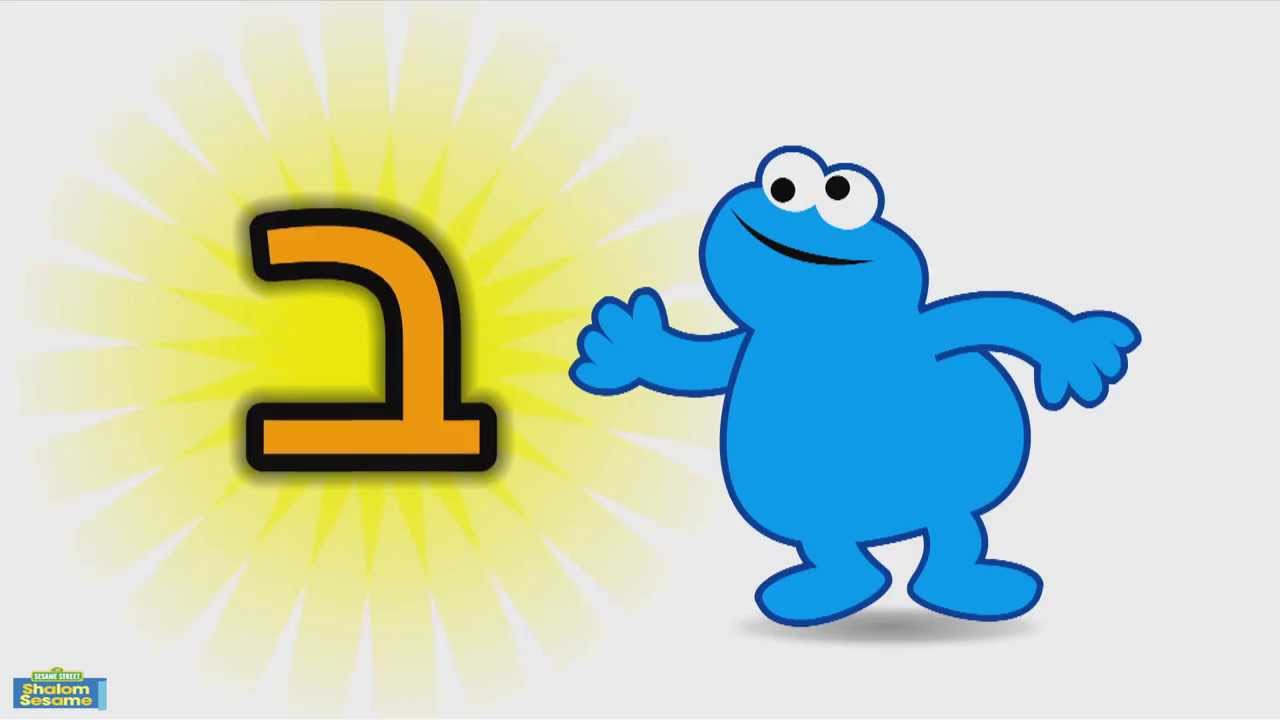
The Letter Vet

Surprise! בּ (bet) has a twin too. בּ(bet's) twin is ב (vet). ב is almost identical to בּ (bet) but 2 things are different.
1.) ב (vet) makes a "v" sound
2.) ב (vet) does not have a belly button.

If you look closely, you can still tell they are in the same family because both have a back bench. I also like the idea of the belly button being vacuumed up. The kids loved the idea of all the twins!


The Letter Chaf


כ (chaf) makes a "ch" sound which is created at the back of the mouth. כ happens to be in the same family as כּ (kaf). They are twins, but NOT identical. These family letters can be confusing so I created a cute story to help your child remember.

כּ (kaf) was not feeling well and had a sore throat, so he went to Nurse Wendy and she gave him a cough drop. His throat felt much better, and when he spoke he made a "k" sound. Now as we know, when one child gets sick so does the other. כ (chaf) also had a sore throat and went to Nurse Wendy, but she was all out of cough drops. So, when he spoke he made a "ch" sound because of his sore throat and mucus.

I know the mucus part is kind of gross, but these little clues within my story really help your child see the difference.

The Letter Reish

 The letter ר (reish) makes a "r" sound.  It is one of my favorites for obvious reasons. (My name starts with one!) ר (reish) also has a round roof. Here are some useful words that start with our new letter:

Spirit - Roo-ach רוח

Legs- Rag-li-yeem רגלים

Head- Rosh ראש

Wednesday- Yom Reh-vee-e יום רביעי

Street- R-chov רחוב


Friday, November 11, 2016


Munchie Math in Hebrew! What?
To practice counting and our colors we used skittles!


Video of all our fun!


Tuesday, November 1, 2016

 Kindergarten גן News


In addition to learning the letter ה, we have also learned a new vowel!


THE LETTER ה (HAY)
ה (hay) is a fun letter because of the silly way you can remember its "h" sound. Imagine that the letter is a horse stall. The gap on the left is where you throw the hay to the horses. Also, you can think of hay as only having half of a side. It is important to note that ה is silent when it shows up at the end of a word. Here are some new words that start with a hay:

Mountain       Har                  הר

Parents         Ho-reem         הורים

Haggadah     Ha-ga-dah      הגדה

She                Hee                 היא

He                  Hoo                 הוא

Havdalah       Hav-da-lah     הבדלה

Hora                                      הורה


New Vowel  


Our new vowel is the sh'va.  It's job is to tell us to say the sound (s) before and then stop.

  For example:  


The sh'va lets us know to say Riv-kah as 2 separate syllables.  Though this can be a hard concept, the students got it very easily.  

Another example would be : 

 לְ  = l

To work on this vowel along with reviewing our others, each students completed a color by vowel worksheet Vowels are "falling" all around.  It was a blast!

Wednesday, October 26, 2016

Sukkot and Simchat Torah have come and gone, and we had such a great time learning about both.  For Sukkot, we spent our time learning about why we celebrate the holiday, as well as the names of the objects.  In addition, your child made their own decoration to place inside of our PEACE themed sukkah.


For Simchat Torah, we celebrated all the reasons we love the Torah and created our very own paper Torahs.   I also brought in a real Torah for each class to see and learn about.  Here are some fun facts they learned,

  • There are 304, 805 letters in the Torah
  • The last letter and first letter of the Torah form the word לב (Lehv) meaning heart
  • We don't touch the Torah scroll with our hands because it is made from animal skin
  • The wood that holds the scroll together is called Etz Chayim.


Tuesday, October 18, 2016

Shalom All!


Please be on the look out for the mitzvah card pictured above.  It will be in your child's homework folder.  Since our shofars are way too big to fit inside our treasure boxes, this picture along with the mitzvah stated on the back, is the first one they can place inside of their treasure boxes.

Tuesday, October 11, 2016

So...It's been a minute, but we have been very busy...

In the past few weeks, we have:
  • learned about the meaning and symbols of Rosh Hashanah
  • created our 1st Treasure
  • defined and discussed Teshuva
  • discussed Yom Kippur
  • AND even learned the Hebrew letter KAF
.  Here's "The Skimm" on what we've been working on.


Round challah: A symbol of completion as we cycle from year to the next.
Pomegranate: Said to contain 613 seeds, just like the Torah contains 613 mitzvot.  We eat it to fill us                          with mitzvot as we enter our new year.
Apples and Honey:  Eat for a sweet year.
Tashlich:  Symbolically casting away things we did that were not nice.  Usually done with bread and                    a body of moving water.
Cards:  Create Cards to wish family and friends a sweet and happy new year.
Machzor:  Different prayer book used on Rosh Hashanah and Yom Kippur
Shofar:  Sounded during the month of  Elul as a reminder that the Days of Awe are approaching and                 that we should reflect on our choices and behavior. 
Fish:  Symbol of being a leader not a follower.  We want to be the head of the fish (leader) and not the tail (follower),

OUR TRADITION IS A TREASURE: 1st Treasure    


In preparation for Rosh Hashanah, we made our very own shofars.  Also, we learned why we blow the shofar, how a shofar is  made, and even the difference between each sound of the Shofar.  From Tekiah all the way to Tekiah Gedola.  This was a very exciting time for us,  

STEPS TO TESHUVA


The act of Teshuva is that of saying sorry and changing your actions.As a class, we spent a great deal of time discussing that the key to Teshuva is that you change your actions.  Above are the steps to Teshuva out of order.  The Steps to Teshuva in order are:
  1. Realize your mistake
  2. Regret what you did
  3. Confess 
  4. Don't do it again.   


TASHLICH

Each class had their own Tashlich service. In place of bread we drew a picture or wrote a note of a mistake we wanted to cast away.  In place of a river or creek, we used a small pool of water.  It was a reflective and meaningful time and I am so proud of how much Kavod they each showed.


YOM KIPPUR
Last week we focused on Yom Kippur.  We discussed the meaning of the day and read the story of Jonah.  We then had a discussion about how Jonah and the people of Nineveh showed  Teshuva.  To remember the story we created our very own whales and Jonahs.


KEEP READING...IT'S SO WORTH IT!!!

THE LETTER כּ (KAF).

Kaf כּ makes a “k” sound like the “k” in kid. This letter is tricky because it looks a lot like a bet בּ. Everyone was sure to have eagle eyes to notice the difference. בּ (bet) has a belly button and a bench that goes to the back, while כּ has a “cough / kaf” drop. This cough drop helps him to say his name very clearly. We enjoyed using and practicing the following words:

Yes         kehn        כּן
  
Kippah                  כּיפה

Dog        Ke-lev    כּלב

Wall       Ko-tel      כּתל

Star        Ko-chav     כּוכב

Chair      Key-say   כּסא


YOU FINISHED READING THIS BLOG POST!!